Japanese Raisin Tree (Hovenia dulcis)
Hovenia dulcis, commonly known as the Japanese Raisin Tree, is a rarely offered, hardy deciduous tree prized for its unusual edible harvest and attractive ornamental shape.
These trees will become large, with the broad, glossy green leaves creating a dense canopy through spring and summer, while clusters of small creamy-white flowers appear in the early summer, attracting bees and other pollinators.
Rather than the fruit itself being eaten, it is the swollen fruit stalks that become sweet as they mature in the autumn. These curved, brown stems develop a flavour often compared to raisins, pears, or honey and can be eaten fresh or dried, simply peel the stalk from the berry tip and enjoy the delicious sweetness.
Japanese raisin trees are surprisingly hardy and well suited to temperate climates, making them an interesting choice for UK gardens. Once established, they are resilient, productive, and relatively low maintenance.
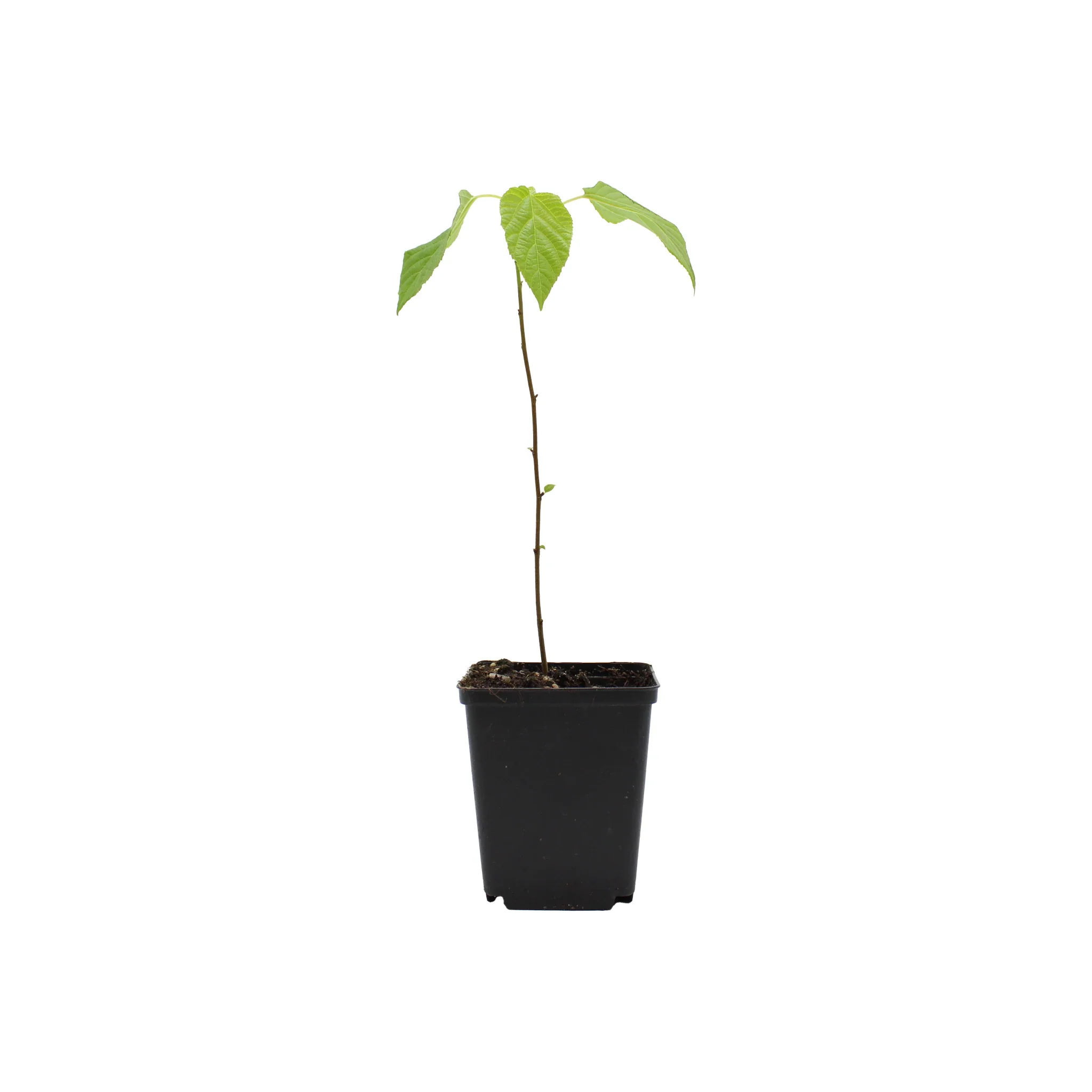
Note: Our young Raisin trees are currently small starter plants, but with the right care and growing conditions they will establish quickly and grow into healthy, productive trees over time.
Growing Information
- Location: Plant in a sunny or lightly shaded position. A warm, sheltered garden location will encourage better growth and fruit production.
- Soil: Prefers well-drained soil but is adaptable to most soil types, including loam and light clay.
- Watering: Water regularly while establishing. Mature trees are moderately drought tolerant but benefit from watering during prolonged dry periods.
- Hardiness: Fully hardy to approximately -15 °C once established, making it suitable for most areas of the UK.
- Pollination & Fruiting: Generally self-fertile. Flowers appear in early summer, with the edible fruit stalks developing and ripening in autumn.
- Growth Rate: Moderate; typically grows 30–60 cm (12–24 in) per year under good conditions.
- Mature Height: Approximately 8–12 m (26–40 ft) in the ground, though it can be kept smaller with pruning.
- Spread: Around 6–8 m (20–26 ft), forming a rounded canopy with spreading branches.
- Maintenance: Requires little pruning beyond removing damaged or crowded branches. Light pruning in late winter can help maintain shape.
This is a wonderful tree for gardeners interested in unusual edible plants and productive landscape trees. It offers seasonal beauty, pollinator-friendly flowers, and a unique harvest.
Available as a single plant in a 7cm pot - the plants are currently 20cm tall including the pot.
Original: $16.22
-65%$16.22
$5.68Product Information
Product Information
Shipping & Returns
Shipping & Returns
Description
Hovenia dulcis, commonly known as the Japanese Raisin Tree, is a rarely offered, hardy deciduous tree prized for its unusual edible harvest and attractive ornamental shape.
These trees will become large, with the broad, glossy green leaves creating a dense canopy through spring and summer, while clusters of small creamy-white flowers appear in the early summer, attracting bees and other pollinators.
Rather than the fruit itself being eaten, it is the swollen fruit stalks that become sweet as they mature in the autumn. These curved, brown stems develop a flavour often compared to raisins, pears, or honey and can be eaten fresh or dried, simply peel the stalk from the berry tip and enjoy the delicious sweetness.
Japanese raisin trees are surprisingly hardy and well suited to temperate climates, making them an interesting choice for UK gardens. Once established, they are resilient, productive, and relatively low maintenance.
Note: Our young Raisin trees are currently small starter plants, but with the right care and growing conditions they will establish quickly and grow into healthy, productive trees over time.
Growing Information
- Location: Plant in a sunny or lightly shaded position. A warm, sheltered garden location will encourage better growth and fruit production.
- Soil: Prefers well-drained soil but is adaptable to most soil types, including loam and light clay.
- Watering: Water regularly while establishing. Mature trees are moderately drought tolerant but benefit from watering during prolonged dry periods.
- Hardiness: Fully hardy to approximately -15 °C once established, making it suitable for most areas of the UK.
- Pollination & Fruiting: Generally self-fertile. Flowers appear in early summer, with the edible fruit stalks developing and ripening in autumn.
- Growth Rate: Moderate; typically grows 30–60 cm (12–24 in) per year under good conditions.
- Mature Height: Approximately 8–12 m (26–40 ft) in the ground, though it can be kept smaller with pruning.
- Spread: Around 6–8 m (20–26 ft), forming a rounded canopy with spreading branches.
- Maintenance: Requires little pruning beyond removing damaged or crowded branches. Light pruning in late winter can help maintain shape.
This is a wonderful tree for gardeners interested in unusual edible plants and productive landscape trees. It offers seasonal beauty, pollinator-friendly flowers, and a unique harvest.
Available as a single plant in a 7cm pot - the plants are currently 20cm tall including the pot.